Nedra Talley Ross, one of the defining voices of the 1960s girl group era and a core member of The Ronettes, has died at the age of 80. Her passing marks the end of an era for fans of classic pop and rock and roll, closing a chapter on a sound that helped shape the DNA of modern music. As tributes pour in from across the industry, listeners are rediscovering the raw energy, emotional depth, and stylistic innovation that The Ronettes brought to the forefront of American music.
Ross wasn’t just a backup singer or a face in the lineup—she was a vital component of a trio that redefined what female vocal groups could be. With their beehive hairdos, dramatic eyeliner, and thunderous Wall of Sound productions, The Ronettes stood apart from their peers. And Nedra’s harmonies—the grounded, honeyed middle between Ronnie Spector’s sultry lead and Estelle Bennett’s vibrant counter—held the group’s sound together.
The Ronettes: Architects of a Sound
Few groups in pop history have left a sonic imprint as indelible as The Ronettes. Emerging from Harlem in the early 1960s, the trio—originally consisting of sisters Ronnie and Estelle Bennett and their cousin Nedra Talley—was signed by producer Phil Spector in 1963. What followed was a string of hits that combined R&B roots with orchestral grandeur, creating a template later echoed by everyone from Bruce Springsteen to Amy Winehouse.
Songs like “Be My Baby,” “(The Best Part of) Breakin’ Up,” and “Walking in the Rain” weren’t just chart-toppers—they were cultural milestones. The opening drumbeat of “Be My Baby” has been called the greatest two seconds in pop music history. But less discussed is how much of that magic relied on Ross’s precision and stability in the vocal blend.
While Ronnie was the fiery frontwoman, and Estelle the flamboyant performer, Nedra was the quiet anchor. Her voice didn’t cut through the mix—it filled it. That balance gave the Ronettes a richness that other girl groups of the time couldn’t replicate. When Phil Spector layered strings, timpani, and echo chambers into his productions, it was Nedra’s consistency that kept the vocals from drowning in the storm.
Nedra Talley Ross’s Role Beyond the Microphone
Though often overshadowed in pop narratives by Ronnie Spector’s dramatic life story and stage presence, Nedra played a critical role behind the scenes. She was the only member of the group to complete high school and later earned a degree from Columbia University—a rare achievement for a young Black woman in the mid-60s entertainment industry.
She also brought a level of discipline and maturity that helped the group navigate the volatile world of 1960s pop. While Phil Spector’s genius was undeniable, his controlling behavior and later criminal actions have cast a long shadow over the group’s legacy. Nedra, along with Estelle, often bore the brunt of that environment, yet maintained professionalism even when the pressures mounted.
After The Ronettes disbanded in the late 1960s, Nedra stepped away from the spotlight, a decision that reflected both personal values and the emotional toll of the industry. She raised a family, embraced her Christian faith, and only occasionally returned to music—most notably during reunion tours and Rock and Roll Hall of Fame appearances.

Legacy in Harmony: Why The Ronettes Still Matter
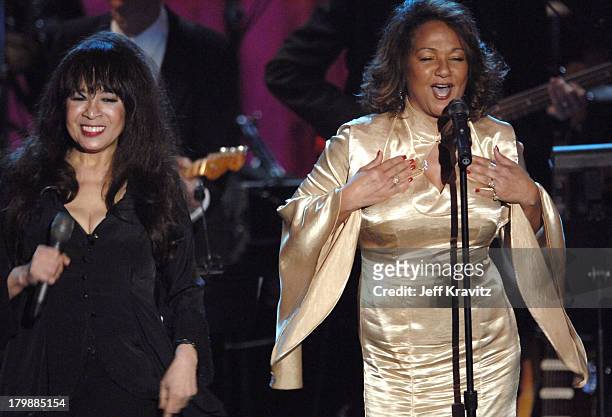
The Ronettes were inducted into the Rock and Roll Hall of Fame in 2007, decades after their peak. The delay was controversial, with many arguing that girl groups were systematically undervalued in rock history. When the honor finally came, it was Nedra Talley Ross who accepted on behalf of the group—Ronnie and Estelle both were unable to attend due to health issues.
In her speech, Ross emphasized unity, gratitude, and the power of music to transcend pain. It was a rare public moment that revealed her depth and grace. More than a performer, she was a steward of the group’s legacy—protecting its integrity even as nostalgia threatened to reduce them to a retro caricature.
Today, The Ronettes’ influence is everywhere. Artists like Lana Del Rey cite them as a blueprint for melancholy glamour. The “Be My Baby” beat has been sampled or imitated in tracks by Oasis, The Jesus and Mary Chain, and even hip-hop artists. But beyond the sonic echoes, there’s a deeper cultural impact: The Ronettes helped normalize Black and Latina women in mainstream pop at a time when segregation still shaped radio playlists.
Nedra, biracial and proud of her heritage, quietly embodied that bridge. She didn’t preach—she performed. And in doing so, she expanded what audiences believed was possible for a female group.
The Cost of Fame and the Quiet Strength of Retreat
One of the most misunderstood aspects of Nedra Talley Ross’s life is her decision to leave the music industry. In an age that equates visibility with success, stepping away is often misread as failure. But for Ross, it was an act of preservation.
While Ronnie Spector battled abuse and legal battles, and Estelle struggled with mental health and addiction, Nedra carved a different path. She married, raised children, and lived a life away from tabloids and touring schedules. She didn’t disappear—she chose presence in a different arena.
That choice offers a quiet counter-narrative to the “rise and fall” story often told about 60s icons. Not every artist must burn brightly and fade. Some choose to burn steadily, in private. Ross’s post-music life wasn’t an exit from legacy—it was a continuation of it on her own terms.
She returned to public performances selectively, including a 1988 tour and appearances at Hall of Fame events. Each time, her voice remained steady, her presence warm. She never sought to relive the past—she honored it.
Revisiting the Music: What to Listen For
For new listeners discovering The Ronettes after Ross’s passing, the experience can be overwhelming. The production is dense, the emotions immediate. But listening closely to Nedra’s contributions reveals nuances that casual fans might miss.
Take “Baby, I Love You.” On the surface, it’s a joyful love song. But listen to the chorus: Nedra’s harmony on the word “you” doesn’t just echo Ronnie’s line—it thickens it, adding a layer of sincerity that transforms the sentiment from playful to profound.
Or consider “Walking in the Rain.” The song’s stormy atmosphere is enhanced by the trio’s staggered phrasing. Nedra enters a fraction later than Ronnie, creating a cascading effect that mimics raindrops hitting pavement. It’s a small detail, but one that shows the group’s precision and musical intuition.
For those building a playlist in her honor, focus not just on the hits, but on deeper cuts: - “I Can Hear Music” – A later track showing their adaptability - “Go Out and Get It” – Raw, R&B-driven energy - “Paradise” – A cover that lets their harmonies shine with minimal production
Each reveals a different facet of what made the group—and Nedra’s role—so essential.
The Enduring Power of the Girl Group Sound
Nedra Talley Ross’s life reminds us that behind every iconic sound, there are individuals making quiet, powerful choices. The Ronettes weren’t just a product of Phil Spector’s studio—they were three women with distinct personalities, talents, and limits.
In an industry that often reduces female performers to archetypes—sex symbol, wild child, wallflower—Ross defied easy categorization. She was intelligent, spiritual, artistically committed, and fiercely private. She refused to be a footnote.
Her death at 80 closes a chapter, but it also invites reflection. As streaming algorithms favor the new and viral, the legacy of artists like Ross challenges us to value depth over virality, cohesion over clout.
The Ronettes didn’t just sing about young love and heartbreak—they gave it weight, drama, and permanence. And Nedra Talley Ross was there, in every note, holding the foundation steady.
Honoring a Voice That Shaped Generations
Nedra Talley Ross didn’t seek the spotlight, but she earned her place in music history. Her passing is a moment to listen closely—not just to the hits, but to the harmonies that held them together.
For artists, her story is a lesson in artistic integrity and self-preservation. For fans, it’s a call to appreciate the ensemble, not just the frontwoman. And for historians, it’s a reminder that legacy isn’t always loud—sometimes, it’s the quiet harmony that lasts the longest.
If you’re rediscovering The Ronettes now, start with the Presenting the Ronettes album. Pay attention to the middle voice. That’s Nedra—grounded, graceful, and unforgettable.
FAQ
Was Nedra Talley Ross related to Ronnie Spector? Yes, Nedra was Ronnie Spector’s first cousin. The trio also included Ronnie’s sister, Estelle Bennett.
Did Nedra Talley Ross continue making music after The Ronettes? She stepped away from full-time music after the group disbanded but participated in reunion events and was active in Christian music circles.
Why wasn’t The Ronettes in the Rock and Roll Hall of Fame sooner? Many believe girl groups were overlooked due to gender and genre biases. They were finally inducted in 2007.
What was Nedra Talley Ross’s most famous song? While “Be My Baby” is the group’s most iconic track, Nedra’s harmonies are featured across all their hits, including “Walking in the Rain” and “Baby, I Love You.”
Did Nedra Talley Ross have any solo work? She did not release major solo pop albums but performed gospel and religious music later in life.
How did Phil Spector influence The Ronettes’ sound? His “Wall of Sound” production technique used layered instruments and reverb, with the trio’s vocals tightly woven into the mix—Nedra’s harmony was essential to its balance.
What made The Ronettes’ harmonies unique? Their blend combined Ronnie’s lead passion, Estelle’s rhythmic punch, and Nedra’s warm, anchoring middle voice—creating a fuller, more dynamic sound than most girl groups of the era.
FAQ
What should you look for in Ronettes Singer Nedra Talley Ross Passes at 80? Focus on relevance, practical value, and how well the solution matches real user intent.
Is Ronettes Singer Nedra Talley Ross Passes at 80 suitable for beginners? That depends on the workflow, but a clear step-by-step approach usually makes it easier to start.
How do you compare options around Ronettes Singer Nedra Talley Ross Passes at 80? Compare features, trust signals, limitations, pricing, and ease of implementation.
What mistakes should you avoid? Avoid generic choices, weak validation, and decisions based only on marketing claims.
What is the next best step? Shortlist the most relevant options, validate them quickly, and refine from real-world results.