
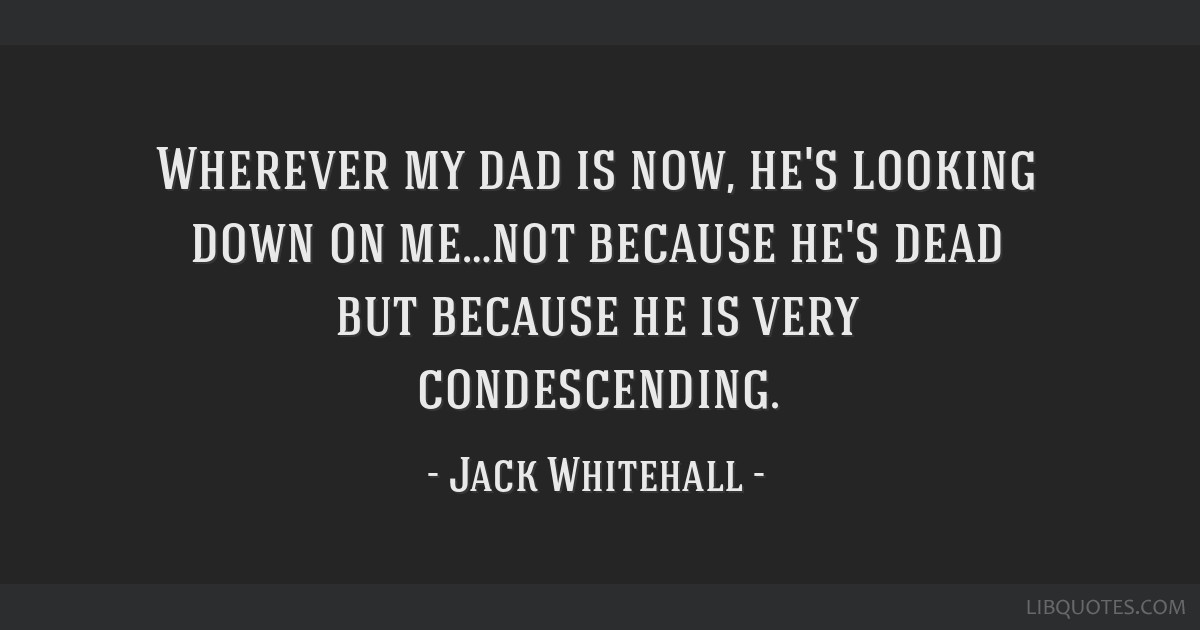
Jack Whitehall’s quote, “I’m sure wherever my dad is, he’s looking down on us. He’s not dead, just very disappointed,” isn't just a punchline—it’s a cultural shorthand for generational tension, emotional honesty, and the awkward choreography of modern family dynamics. Delivered with his signature deadpan wit, the line cuts through pleasantries and lands squarely in the realm of relatable truth. Behind the laughter lies a layered commentary on work ethics, emotional transparency, and the unspoken rules that shape how we relate to authority, family, and ourselves.
This quote, often shared as a “quote of the day,” resonates far beyond comedy circles. It reflects a broader shift in how younger generations process relationships—with humor as both shield and scalpel. Let’s break down why this single line carries so much weight and what it reveals about honesty, workplace behavior, and the contradictions of human nature.
The Anatomy of a Modern Comedy Classic
Jack Whitehall, known for his sharp observational humor and self-deprecating style, built much of his career on the dynamic between himself and his impeccably British, emotionally reserved father, Michael Whitehall. Their mismatch—Jack’s irreverent millennial energy versus Michael’s old-school stoicism—became comedy gold in tours like Daddy Issues and the Netflix travel series Jack Whitehall: Travels with My Father.
The quote works because it’s absurd yet emotionally precise. The idea that a living parent could be “looking down” from above is illogical, yet emotionally real. Many people joke that their parents disapprove—even when they’re in the same room. Whitehall flips the cliché of “looking down from heaven” and repurposes it to highlight ongoing emotional judgment.
Why it sticks: - It subverts a well-known phrase with comedic timing. - It exposes a universal family tension—approval vs. autonomy. - It uses hyperbole to reveal emotional truth.
Comedians like Whitehall don’t just tell jokes—they map the emotional geography of modern life. This line, in particular, functions as a micro-commentary on how we perform for our elders, even when they’re not physically present.
Honesty Through Humor: Why We Laugh to Tell the Truth
There’s a reason comedy often doubles as confessional. In cultures that prioritize politeness—especially in Britain—direct emotional honesty can feel uncomfortable. Humor becomes the workaround.
Whitehall’s quote isn’t just about his dad. It’s about the pressure to meet expectations. It’s about the silent evaluations we feel from parents, bosses, and even society. He uses comedy to say what most wouldn’t: I feel judged. I feel inadequate. And yeah, maybe I’m still trying to win approval.
This reflects a larger trend in modern comedy—personal, confessional, and psychologically astute. Comedians like Hannah Gadsby, Bo Burnham, and John Mulaney use humor to unpack trauma, anxiety, and identity. Whitehall’s approach is lighter, but no less revealing.
Workplace parallel: In professional environments, employees often use sarcasm or dry humor to critique management without confrontation. A junior employee might say, “Of course the CEO cares about burnout—he sent that email at 2 a.m.,” echoing Whitehall’s tone. It’s not just a joke; it’s feedback disguised as irony.
Humor, when used skillfully, creates space for honesty without the risk of direct conflict.
Work Culture and the Legacy of Emotional Restraint
The Whitehall父子 (father-son) dynamic mirrors a broader cultural shift in work environments. Michael Whitehall embodies the traditional British upper-middle-class ethos: stiff upper lip, emotional detachment, achievement-driven. Jack, by contrast, is expressive, self-aware, and openly insecure.
This clash isn’t just familial—it’s generational and professional.
| Trait | Michael Whitehall (Old Guard) | Jack Whitehall (New Norm) |
|---|---|---|
| Communication | Reserved, formal | Open, self-deprecating |
| Feedback Style | Implied judgment | Direct, often humorous |
| Work Ethic | Duty-based | Purpose-driven |
| Emotional Expression | Suppressed | Acknowledged, even mocked |
In today’s workplaces, the shift toward psychological safety, vulnerability, and emotional intelligence challenges the old model. Leaders are now encouraged to admit mistakes, show empathy, and foster open dialogue—values Jack embodies, even if ironically.
Yet, remnants of Michael’s world remain. Many corporate cultures still reward stoicism, overwork, and emotional detachment. Employees “perform” professionalism while quietly resenting the disconnect between stated values and real behavior.
Whitehall’s joke about his dad “looking down” applies just as well to corporate hierarchies. How often do employees say, “I’m sure management is thrilled with this 80-hour week,” when they actually mean, We’re being exploited?
The humor reveals the gap between expectation and reality—a gap that, left unaddressed, erodes trust and engagement.
Human Nature and the Performance of Respectability
At its core, the quote exposes a fundamental human contradiction: we crave approval, even from those we outwardly rebel against.
Jack mocks his father’s disapproval, but the very act of referencing it shows he cares. That tension—between defiance and desire for validation—is deeply human. It’s present in family life, yes, but also in how we navigate social status, career advancement, and public identity.
Social media amplifies this. We post curated lives not just for peers, but for parental ghosts. “Would Dad like this photo?” “Would my old boss think this career move is respectable?” The internalized judge never fully retires.
Whitehall’s comedy works because he names the invisible audience we all carry. His father isn’t just a character—he’s a symbol of societal expectations: be successful, be dignified, don’t complain, don’t fail visibly.
But by laughing at the pressure, we reclaim power. The joke becomes resistance.
Real-world example: A marketing professional quits a high-paying job to start a podcast about mental health. On launch day, they tweet: “Dad, this isn’t a real job, but it’s the only one I can breathe in.” It’s funny, but it’s also a declaration of independence—delivered with a wink.
Like Whitehall’s quote, it uses humor to soften a radical act: choosing authenticity over approval.
Turning Comedy Into Life Lessons
What can we learn from a single line of stand-up?
- Honesty doesn’t have to be solemn.
- You can tell hard truths with a smile. In team meetings, a well-placed joke can open conversations about stress or workload that might otherwise go unspoken.
- Acknowledge the invisible judges.
- Identify whose voice you’re trying to please—parent, boss, society. Ask: Is that voice helping or hindering me?
- Use humor as emotional hygiene.
- Laughter reduces tension. In high-pressure environments, a shared joke can rebuild connection faster than a formal debrief.
- Don’t confuse stoicism with strength.
- The “keep calm and carry on” model has limits. Modern resilience includes vulnerability, adaptability, and self-awareness.
- Reframe disappointment as data.
- If someone’s disappointed in you—like Jack’s dad allegedly is—ask what that reveals about their values, not just your choices. Use it to understand, not just react.
These aren’t just personal insights—they’re tools for better leadership, communication, and self-management.
The Cultural Impact of a Well-Timed Punchline
Whitehall’s quote endures because it’s been absorbed into the vernacular. It appears in memes, Instagram captions, and workplace banter. It’s quoted out of context, yet still lands.
That staying power reflects a deeper cultural moment. We’re moving toward a world where emotional intelligence is valued, where hierarchy is questioned, and where authenticity is rewarded—even when delivered with irony.
The quote also highlights a shift in British identity. The reserved, repressed Englishman—once a national stereotype—is being reexamined. Younger British figures like Whitehall, Phoebe Robinson, and Munya Chawawa use comedy to unpack class, privilege, and emotional repression in ways that are accessible, funny, and revealing.
When Whitehall says his dad is “looking down,” he’s not just joking about parental judgment. He’s commenting on a legacy of emotional silence—and poking it with a very sharp, very British stick.
Final Thought: Laugh, Then Reflect
Jack Whitehall’s “quote of the day” works because it’s funny, true, and layered. It’s not just a throwaway line—it’s a mirror. It shows us how we navigate approval, how we inherit emotional patterns, and how we use humor to survive them.
In your next team meeting, when someone cracks a joke about “the boss breathing down our necks,” recognize it for what it is: a moment of honesty in disguise. Just like Jack’s dad, the judgment may not be spoken—but it’s felt.
Use that awareness. Laugh when you need to. But don’t stop there. Ask: What’s behind the joke? What needs to change? And who are we really performing for?
Because sometimes, the deepest truths come wrapped in punchlines.
FAQs
What is Jack Whitehall’s most famous quote? “I’m sure wherever my dad is, he’s looking down on us. He’s not dead, just very disappointed,” from his stand-up specials and Travels with My Father.
Is Jack Whitehall’s dad really disappointed in him? No—it’s comedic exaggeration. The dynamic is staged for humor, though it reflects real generational and emotional differences.
What is the main theme of Jack Whitehall’s comedy? Generational clash, British class quirks, emotional repression, and the absurdity of modern life, often through the lens of his relationship with his father.
How does Jack Whitehall use humor to discuss serious topics? He masks emotional truths in irony and exaggeration, making uncomfortable topics like parental judgment or insecurity more approachable.
What can we learn from Jack Whitehall’s comedy in the workplace? That humor can be a tool for feedback and connection, and that emotional transparency—even when joked about—builds trust.
Does the quote apply beyond family relationships? Yes. It’s widely used to describe any situation where authority figures (bosses, institutions, society) seem silently disapproving.
Why is this quote so relatable? It taps into the universal fear of not measuring up—and the use of humor to cope with emotional pressure.
FAQ
What should you look for in Jack Whitehall's Quote of the Day: Humor, Honesty, and Human Truths? Focus on relevance, practical value, and how well the solution matches real user intent.
Is Jack Whitehall's Quote of the Day: Humor, Honesty, and Human Truths suitable for beginners? That depends on the workflow, but a clear step-by-step approach usually makes it easier to start.
How do you compare options around Jack Whitehall's Quote of the Day: Humor, Honesty, and Human Truths? Compare features, trust signals, limitations, pricing, and ease of implementation.
What mistakes should you avoid? Avoid generic choices, weak validation, and decisions based only on marketing claims.
What is the next best step? Shortlist the most relevant options, validate them quickly, and refine from real-world results.