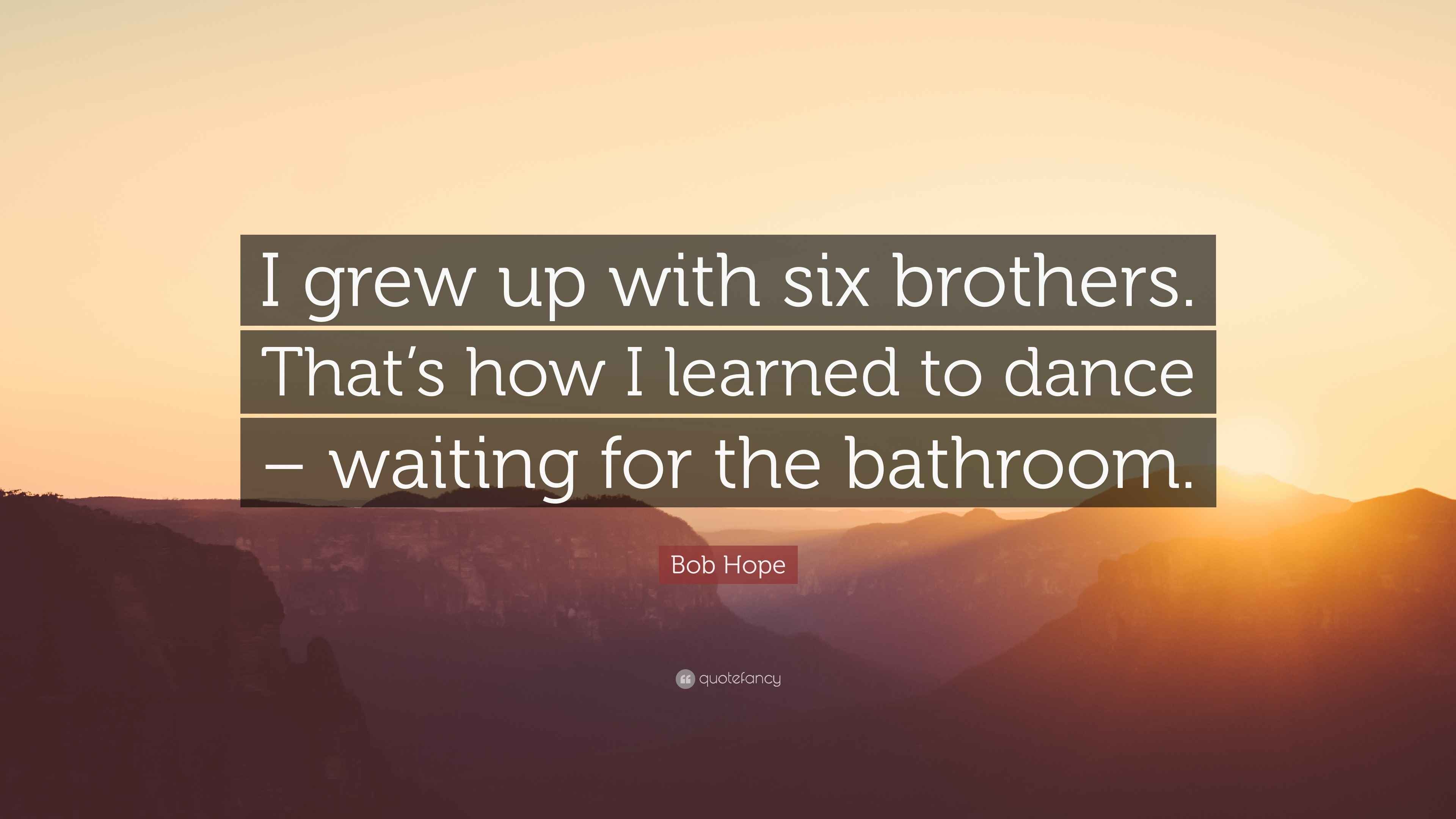
Bob Hope didn’t just make America laugh—he taught it how to survive chaos with a punchline. When he said, “I grew up with six brothers—that’s how I learned to dance,” he wasn’t just delivering a one-liner. He was distilling a lifetime of insight into family, resilience, and the art of timing—lessons that stretch far beyond the dinner table and into relationships, aging, and even the political theater of everyday life.
This single quote, often shared as a “quote of the day,” carries layers. On the surface: a joke about crowded bathrooms and sibling rivalry. Beneath it: a masterclass in adaptability, emotional intelligence, and surviving high-stakes environments with grace. Let’s unpack why this line still resonates—and how its truths apply to modern life.
The Sibling Crucible: Where Social Skills Are Forged
Growing up with six brothers wasn’t just crowded—it was a relentless training ground for social navigation. Bob Hope’s household operated like a micro-society: limited resources, constant competition, and zero privacy. In such an environment, survival depends on more than strength—it demands timing, strategy, and wit.
“That’s how I learned to dance” isn’t just about avoiding physical elbows—it’s about mastering rhythm in human interaction. You learn to read moods, anticipate moves, and step aside before conflict erupts. These are the same skills that define emotional intelligence in adult relationships.
Real-World Parallels:
- Workplace Dynamics: Just like vying for the last piece of meatloaf, office politics require knowing when to speak, when to stay quiet, and when to make a joke to defuse tension.
- Romantic Relationships: Partners who grew up in large families often handle conflict with more flexibility—having learned early that winning every argument isn’t the goal; preserving harmony is.
- Parenting: Hope’s experience reflects the chaos many parents face today. The ability to “dance” through meltdowns, negotiations, and sibling squabbles is a direct transfer of childhood survival tactics.
People from large families often develop a kind of social radar—an instinctive sense of group energy. Hope didn’t just react to his environment; he learned to lead it with humor.
Humor as a Defense Mechanism—and a Bridge
Hope’s comedy wasn’t just entertainment. It was armor. In a house full of brothers, a well-timed joke could deflect a punch, win favor, or turn an enemy into an ally. This use of humor as a social tool is especially relevant today, where polarization runs deep in both personal and political spheres.
How Humor Transforms Conflict:
- Defuses tension without conceding ground
- Builds rapport through shared laughter
- Signals intelligence and emotional awareness
- Creates psychological safety in high-stress environments
Consider a modern couple arguing over finances. One partner says, “Looks like we’re budgeting like Bob Hope grew up—with seven people fighting over one pair of shoes.” The joke reframes the conflict, reducing defensiveness and opening space for collaboration.
Hope understood that laughter isn’t avoidance—it’s engagement with lower stakes. In politics, where discourse often turns toxic, his style of light-hearted jabbing offered criticism without burning bridges. He roasted presidents—but always left them smiling.
The Art of Timing: From Dinner Table to the World Stage
“I learned to dance” is as much about timing as it is about movement. In comedy, timing is everything. In life, it’s just as crucial.
Hope’s brothers didn’t just teach him how to avoid physical collisions—they trained his internal clock. Knowing when to speak, when to act, when to retreat—these are the rhythms of effective leadership, negotiation, and personal growth.
Practical Applications of Comic Timing in Life:
| Situation | Poor Timing | Great Timing (Hope-Style) |
|---|---|---|
| Giving Feedback | Criticizing during a stressful moment | Wrapping critique in humor, delivered after tension eases |
| Asking for a Raise | Right after company layoffs | After a major win, with a lighthearted opener |
| Addressing Relationship Issues | Mid-argument, emotionally charged | During a calm moment, with a self-deprecating tone |
Hope’s career was built on this precision. His USO tours, often in war zones, relied on delivering humor at exactly the right moment—when soldiers needed relief most. He didn’t just perform; he healed with timing.
In relationships, mistimed honesty can destroy trust. Well-timed vulnerability builds it. The same applies to aging—knowing when to let go of old roles, when to embrace new phases, when to speak up or step back.
Aging with Grace: What Hope Knew About Growing Older
Bob Hope lived to 100. His longevity wasn’t accidental. His outlook—shaped by early adversity and constant adaptation—equipped him to age not with resistance, but with rhythm.
Growing up in a crowded household taught him flexibility. He didn’t cling to control; he learned to flow. That mindset is critical as we age: - Accepting physical changes with humor, not shame - Letting go of the need to “win” every conversation - Finding joy in smaller moments, not just grand achievements
Hope famously joked about aging: “I’m so old, when I got my AARP card, the guy said, ‘You qualify for a walker!’” The joke disarmed fear. It invited others to laugh with him, not at him.
Modern Pitfalls in Aging:
- Over-identifying with past roles (“I used to run this company—why don’t they listen now?”)
- Resisting help due to pride
- Withdrawing instead of adapting
Hope’s lesson? Keep dancing. Stay engaged. Use humor to stay relevant—even when the world seems to move on.
Politics, Punchlines, and the Power of Non-Threatening Truth
Hope’s political humor was masterful. He mocked presidents from FDR to Clinton—but never alienated them. How? He used self-deprecation and absurdity to make critique palatable.
At a time when political discourse is often binary and brutal, Hope’s approach offers a blueprint: - Target power, not people - Use exaggeration to expose truth - Leave the target laughing, not attacked
His famous line: “I’ve been to 57 countries and 49 states—and I still like Tamaqua best.” (Tamaqua, Pennsylvania, had no particular significance.) The absurdity underlined the vanity of empty political boasting.
Why This Matters Today: In relationships strained by political differences, Hope’s style offers an off-ramp. Instead of debating policy, try: “We’re arguing like I used to with my brothers over the last hot dog—except now it’s about tax reform.”
Humor doesn’t resolve ideology—but it can preserve the relationship while differences exist.
The Enduring Relevance of a 10-Second Quote
“I grew up with six brothers—that’s how I learned to dance” lasts because it’s compact yet expansive. It’s a story, a lesson, and a strategy in one breath.
It speaks to: - Survival in chaos - Emotional agility - The power of perspective
In an age of information overload, such concise wisdom cuts through noise. That’s why it’s shared as a “quote of the day”—not just for inspiration, but for practical application.
How to Apply Hope’s Wisdom Daily:
- When tension rises, ask: “How would I dance through this?”—not fight or flee.
- Use humor to reframe stress, not avoid it.
- Observe group dynamics like a comedian—notice rhythms, pauses, power shifts.
- Practice timing in conversations—listen for the beat before speaking.
- Age with humor—mock your own quirks before others can.
Hope’s life proves that comedy isn’t trivial—it’s a survival skill refined in the furnace of family life.
Final Thought: Keep Dancing
Bob Hope didn’t just endure life’s chaos—he choreographed it. His quote about six brothers isn’t a nostalgic throwaway. It’s a philosophy: in the crush of demands, the best move isn’t to push back, but to move with the rhythm.
Whether in love, work, aging, or political debate, the ability to “dance” through difficulty—graceful, aware, and lightly armed with humor—is a superpower. And like any skill, it can be learned.
Start today. Listen to the beat. Step lightly. And when in doubt, make them laugh.
Frequently Asked Questions
What did Bob Hope mean by “I learned to dance” growing up with brothers? He used humor to describe how navigating a crowded, competitive household taught him timing, awareness, and conflict avoidance—skills essential in comedy and life.
How does sibling rivalry build emotional intelligence? Constant interaction with siblings forces early development of empathy, negotiation, and reading social cues—key components of emotional intelligence.
Can humor really improve relationships? Yes—when used skillfully, humor reduces tension, builds connection, and allows difficult topics to be addressed indirectly.
How can Bob Hope’s lessons apply to workplace conflict? By using timing, light-heartedness, and awareness of group dynamics to defuse tension and influence outcomes without confrontation.
What’s the connection between comedy and aging well? Humor helps reframe limitations, reduces fear of decline, and maintains social connection—critical factors in healthy aging.
Did Bob Hope have a large family? Yes—he was one of seven sons, raised in a close-knit, economically modest household in Cleveland, Ohio.
How can I use “dancing” as a metaphor in daily life? See challenges not as obstacles to overcome, but rhythms to move with—adapting, flowing, and maintaining balance under pressure.
FAQ
What should you look for in Bob Hope's Life Lessons Through Humor and Sibling Chaos? Focus on relevance, practical value, and how well the solution matches real user intent.
Is Bob Hope's Life Lessons Through Humor and Sibling Chaos suitable for beginners? That depends on the workflow, but a clear step-by-step approach usually makes it easier to start.
How do you compare options around Bob Hope's Life Lessons Through Humor and Sibling Chaos? Compare features, trust signals, limitations, pricing, and ease of implementation.
What mistakes should you avoid? Avoid generic choices, weak validation, and decisions based only on marketing claims.
What is the next best step? Shortlist the most relevant options, validate them quickly, and refine from real-world results.